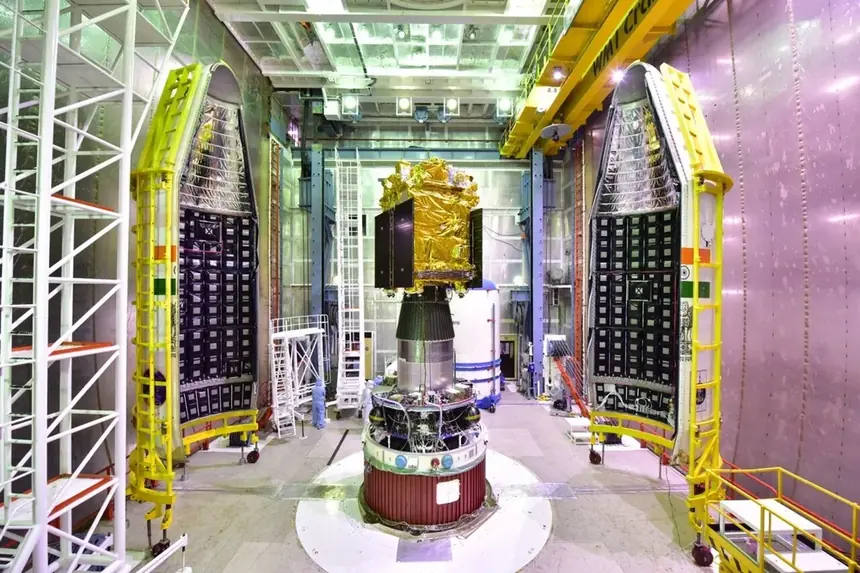
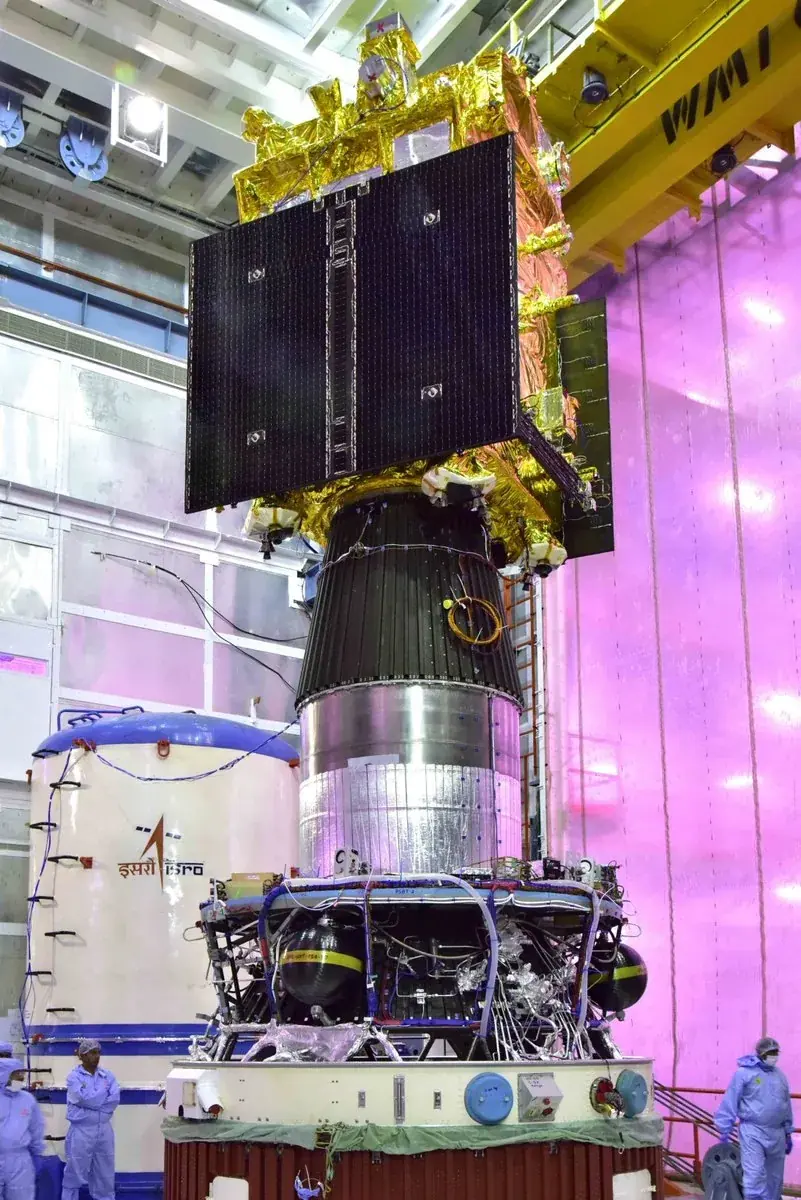
Aditya-L1 is India's first space mission dedicated to studying the Sun. It launched in September 2023 and reached its final position in January 2024.
The mission does not orbit the Earth. It sits at a special point in space, about 1.5 million km from Earth, called Lagrange point 1, or L1.
What is L1?
There are five Lagrange points in the Earth–Sun system. At these points, the pull of the Earth and the Sun balance out, so a spacecraft can stay in place with very little fuel.
L1 is the best place to watch the Sun from. It always faces the Sun, and it is far enough from Earth that our planet never blocks the view.
- The spacecraft stays in line with the Earth and the Sun
- It needs almost no fuel to hold position
- It gives an uninterrupted view of the Sun
What does it study?
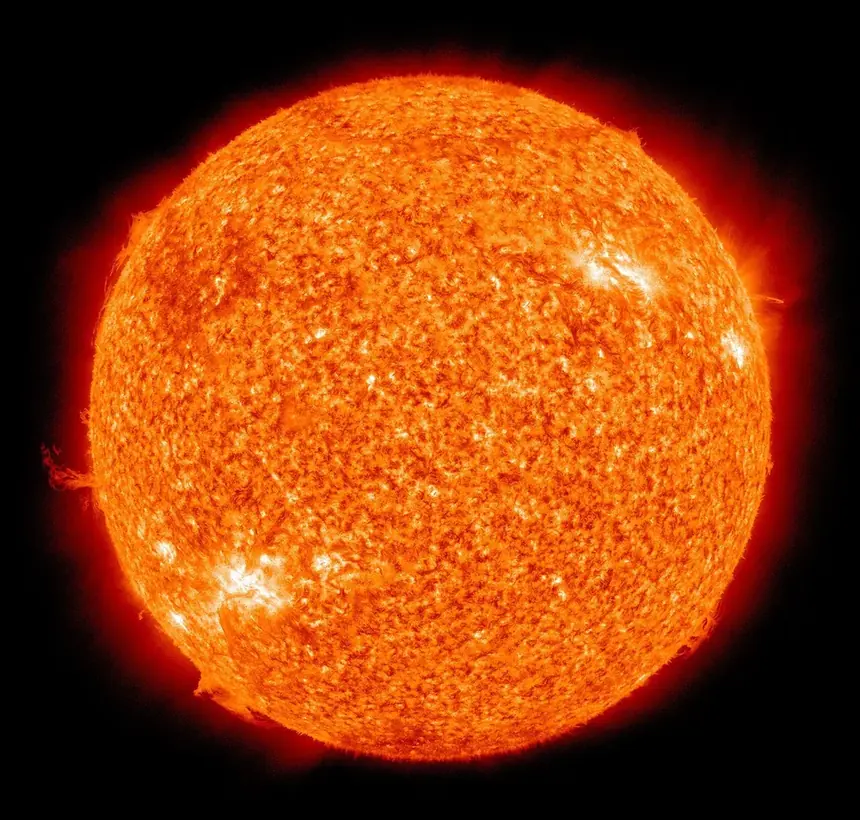
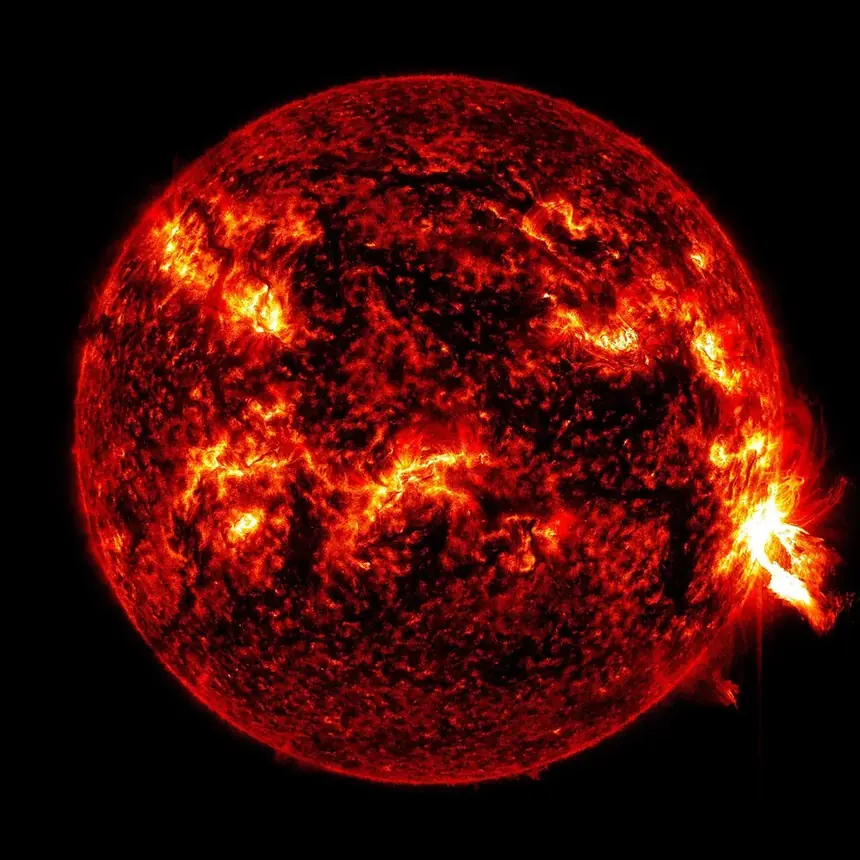
The Sun sends out more than light. It also throws out a constant stream of charged particles, called the solar wind, and sometimes huge bursts called solar storms.
Aditya-L1 watches all of this. Its instruments study the Sun's outer atmosphere, the corona, and measure the particles and magnetic fields that reach the spacecraft.
Why does space weather matter?
Solar storms can damage satellites, disrupt GPS, disturb radio communication, and even affect power grids on the ground.
What comes next?
Aditya-L1 is expected to work for about five years. Its data is used by researchers in India and around the world.