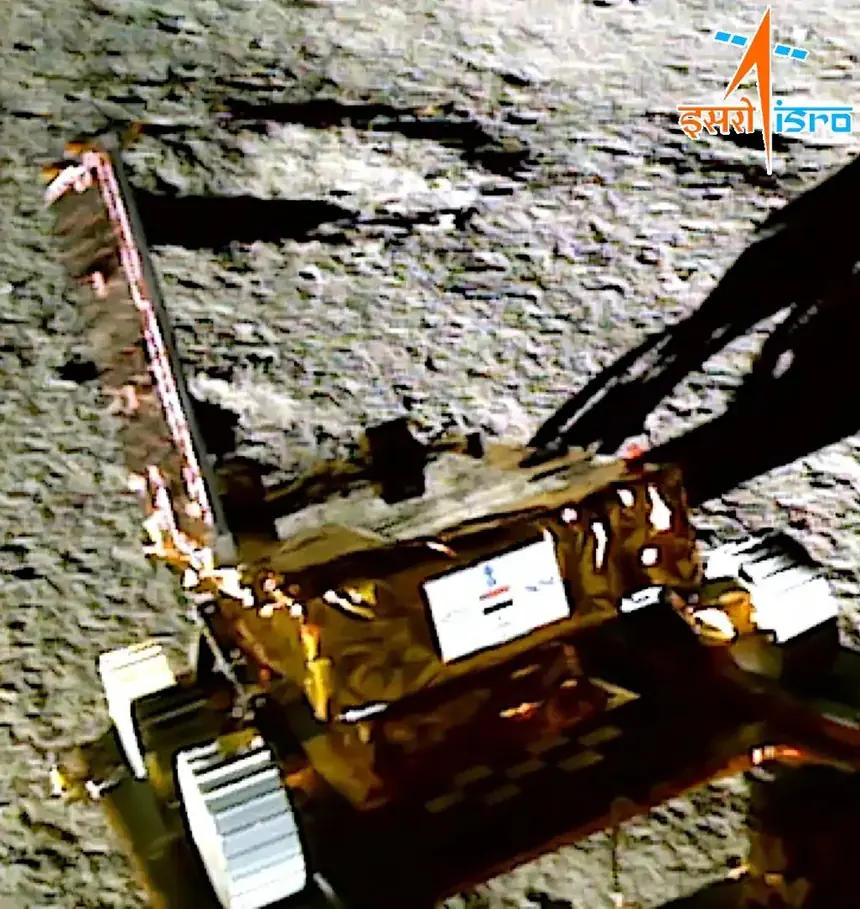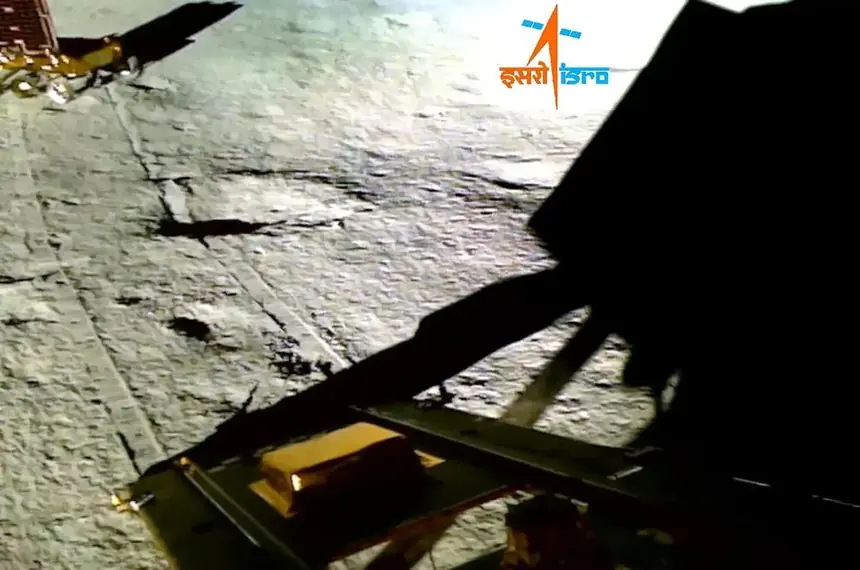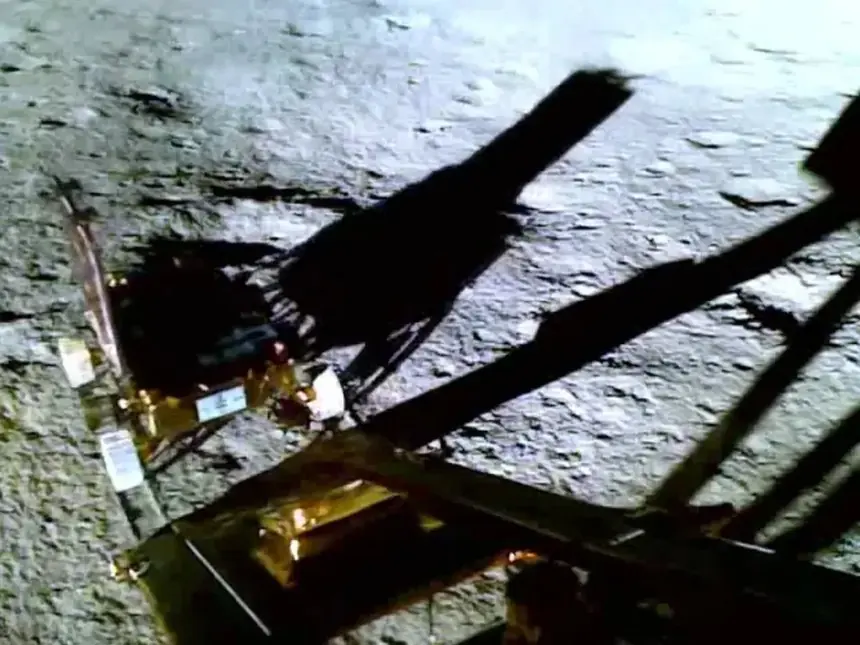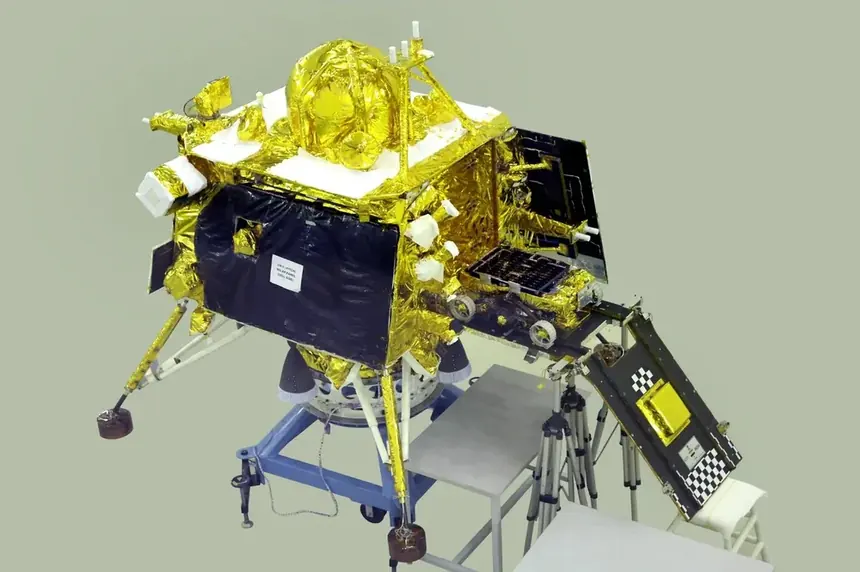
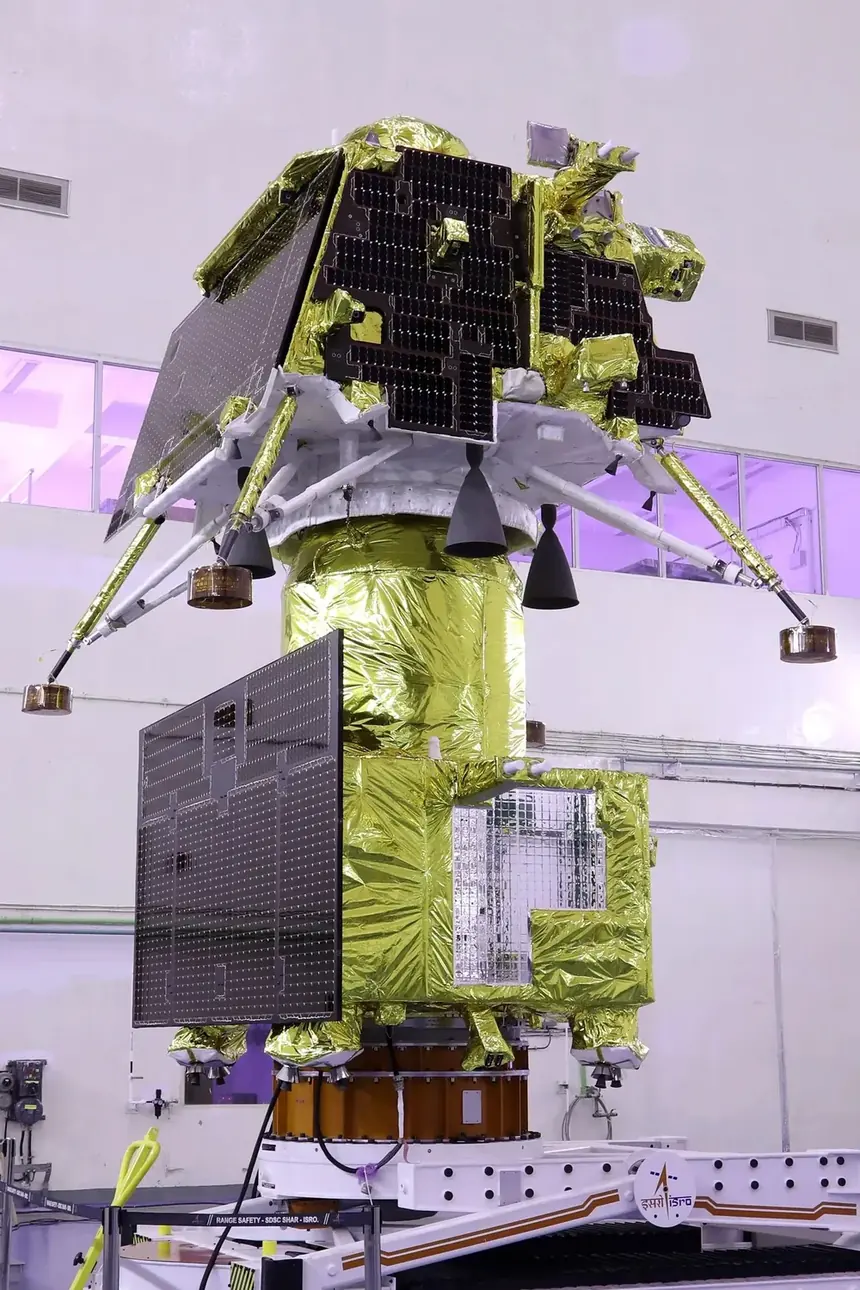
On 23 August 2023, India became the first country to land a spacecraft near the Moon's south pole. The Chandrayaan-3 mission placed the Vikram lander and the Pragyan rover on the lunar surface, and the whole country watched.
What was the mission?
Chandrayaan-3 was ISRO's third lunar mission and its second attempt to land. The spacecraft launched on 14 July 2023 from Sriharikota and took about 40 days to reach the Moon. On 23 August, the Vikram lander touched down safely.
With this, India joined the United States, the Soviet Union and China as the only countries to have soft-landed on the Moon.
Why does the south pole matter?
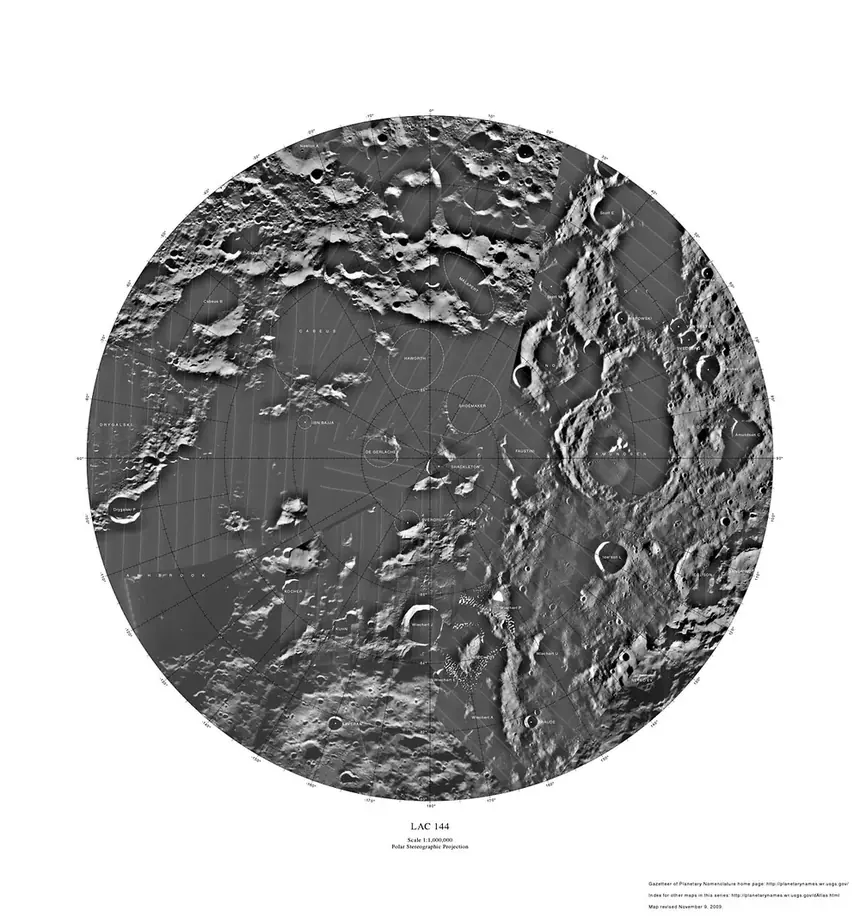
The south pole is one of the most interesting places on the Moon. Large parts of it never receive direct sunlight, and temperatures can fall below minus 200 degrees Celsius. Scientists believe these dark craters may hold water ice.
- Water ice could support future human missions
- The region may contain rare minerals
- Permanently shadowed craters preserve a record of the early solar system
What did the rover do?
The Pragyan rover studied the soil and rocks near the landing site. It measured the temperature of the surface, looked at the composition of the lunar soil, and studied the thin atmosphere around the Moon.
What comes next?
ISRO is now preparing Gaganyaan, India's first crewed spaceflight. The mission will carry Indian astronauts to low Earth orbit. If it succeeds, India will become the fourth country to send humans to space on its own rocket. After that, the plan is a national space station and a crewed Moon landing.