A black hole is one of the strangest objects in the universe. It is a region of space where gravity is so strong that nothing — not even light — can escape. That is where the name comes from: it is black, because no light ever gets out.
What is a black hole?
A black hole is not a hole in space. It is a huge amount of matter squeezed into a very small space. Because the mass is packed so tightly, its gravity becomes extreme. Around every black hole there is a boundary called the event horizon. Once anything crosses it, there is no way back.
- The event horizon is the point of no return
- Nothing that crosses it can escape, not even light
- The more mass a black hole has, the wider its event horizon
How are black holes born?
Most black holes form when a very large star runs out of fuel and collapses. The star's core falls inwards under its own gravity until it is crushed into a single point. Smaller stars end their lives differently — as white dwarfs or neutron stars — but the heaviest ones can leave a black hole behind.
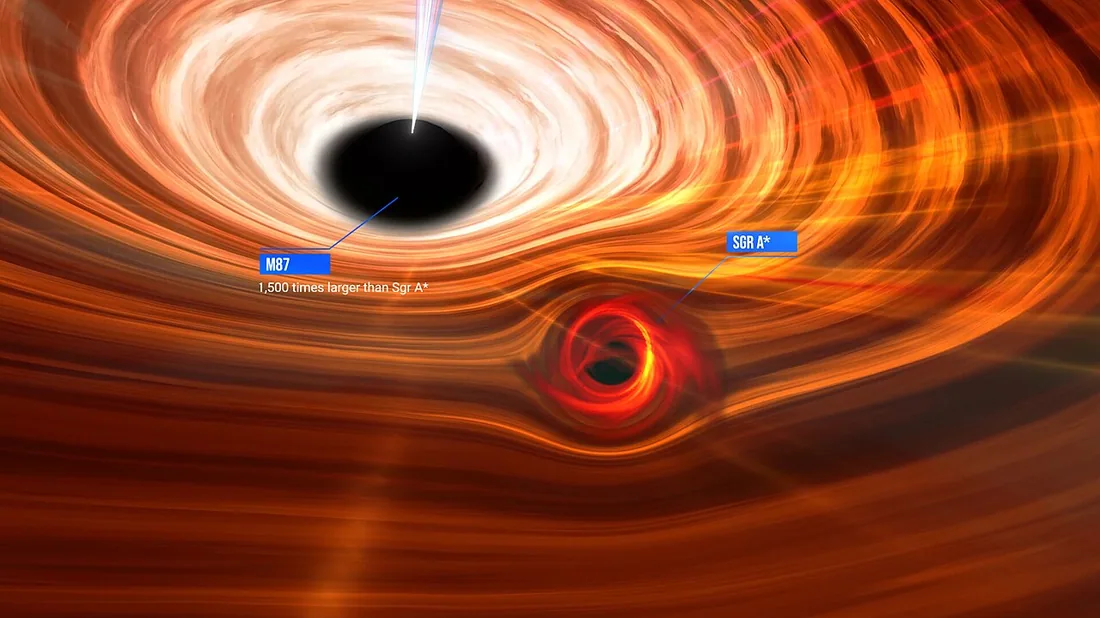
Scientists also believe there are much larger black holes, called supermassive black holes, at the centre of most galaxies. The one at the centre of our Milky Way is called Sagittarius A*, and it holds the mass of about four million Suns.
Why can nothing escape?
Gravity gets stronger the closer you are to a mass. Near a black hole the pull becomes so strong that you would have to travel faster than light to get away — and nothing can travel faster than light. So anything that crosses the event horizon is trapped.
How do we know they exist?
We cannot see a black hole directly, because no light comes out of it. Instead, we watch what happens around it. Gas and dust falling towards a black hole get extremely hot and glow brightly, forming a disc of light called an accretion disk. By watching how nearby stars and gas move, astronomers can work out that a huge invisible mass is there.
In 2015, the LIGO experiment detected gravitational waves — ripples in space itself — from two black holes merging far away. That gave us a completely new way to study them.
The first photo of a black hole
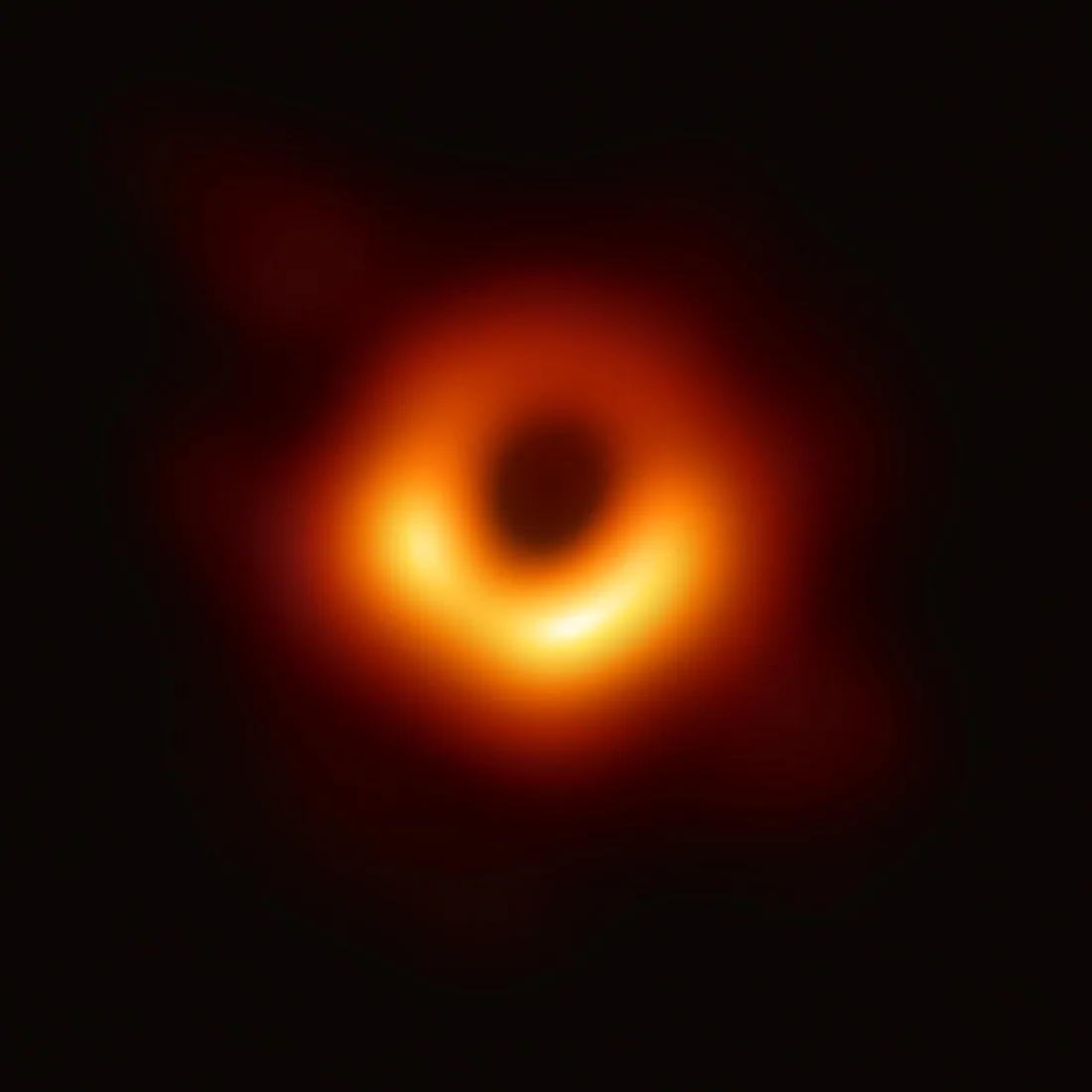
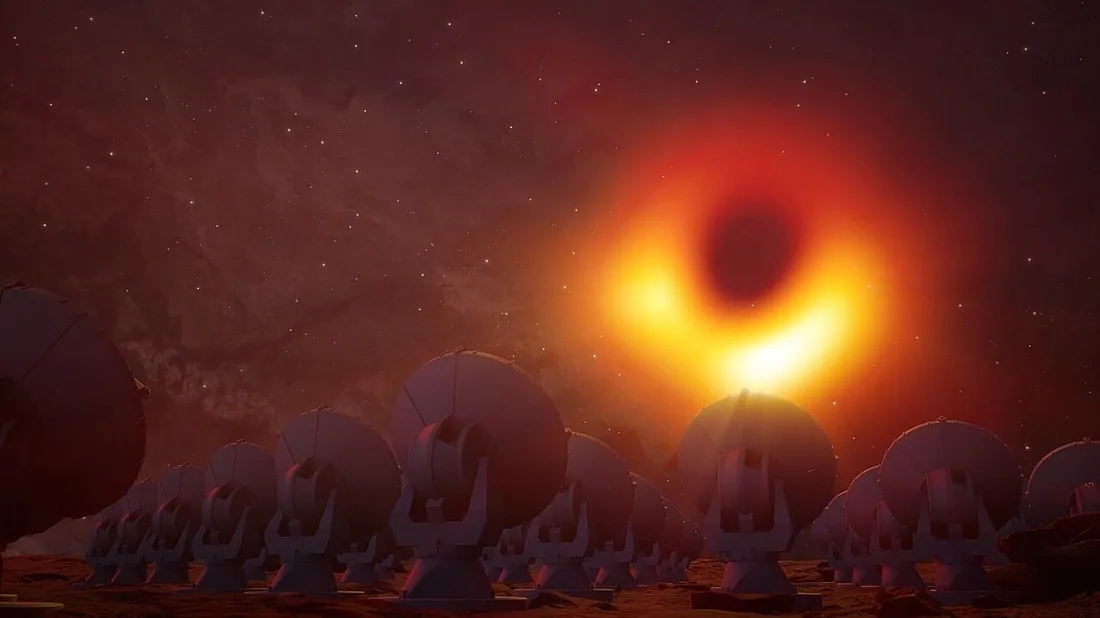
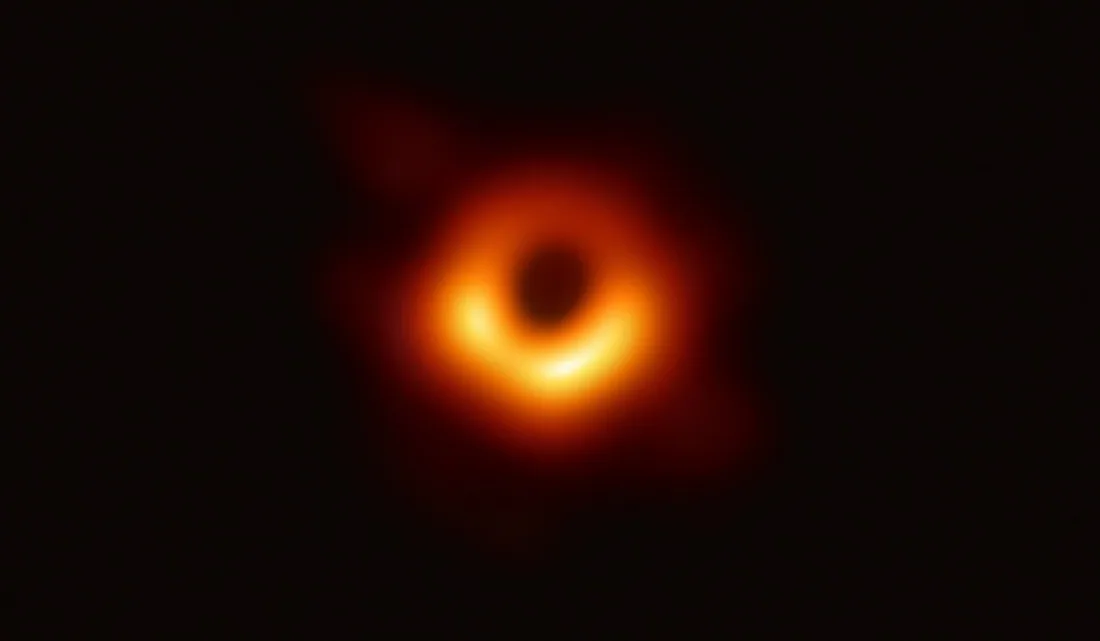
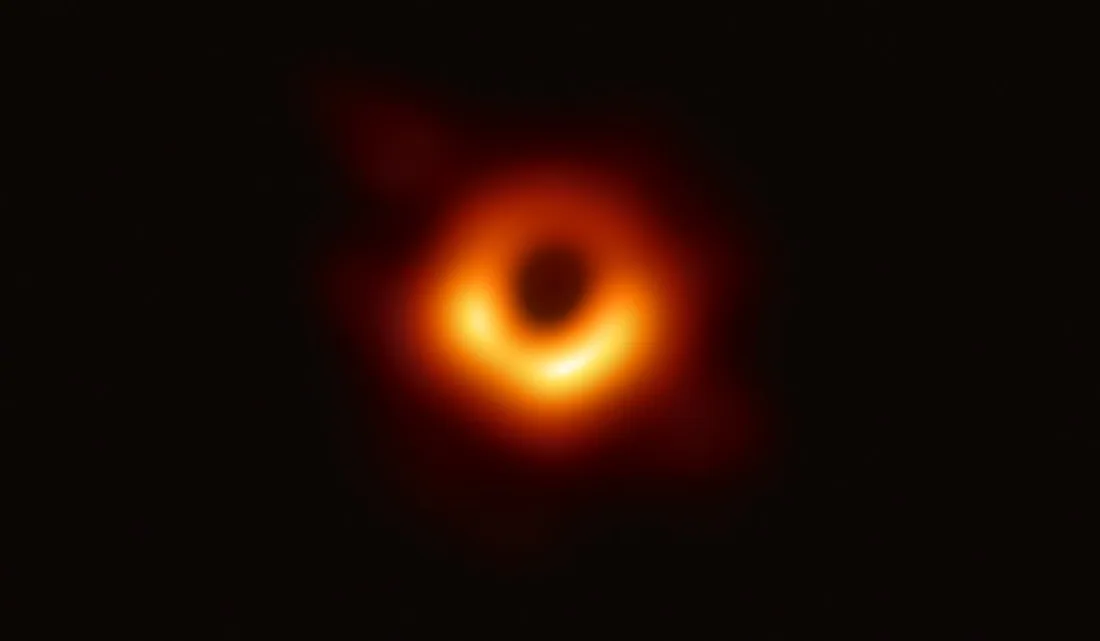
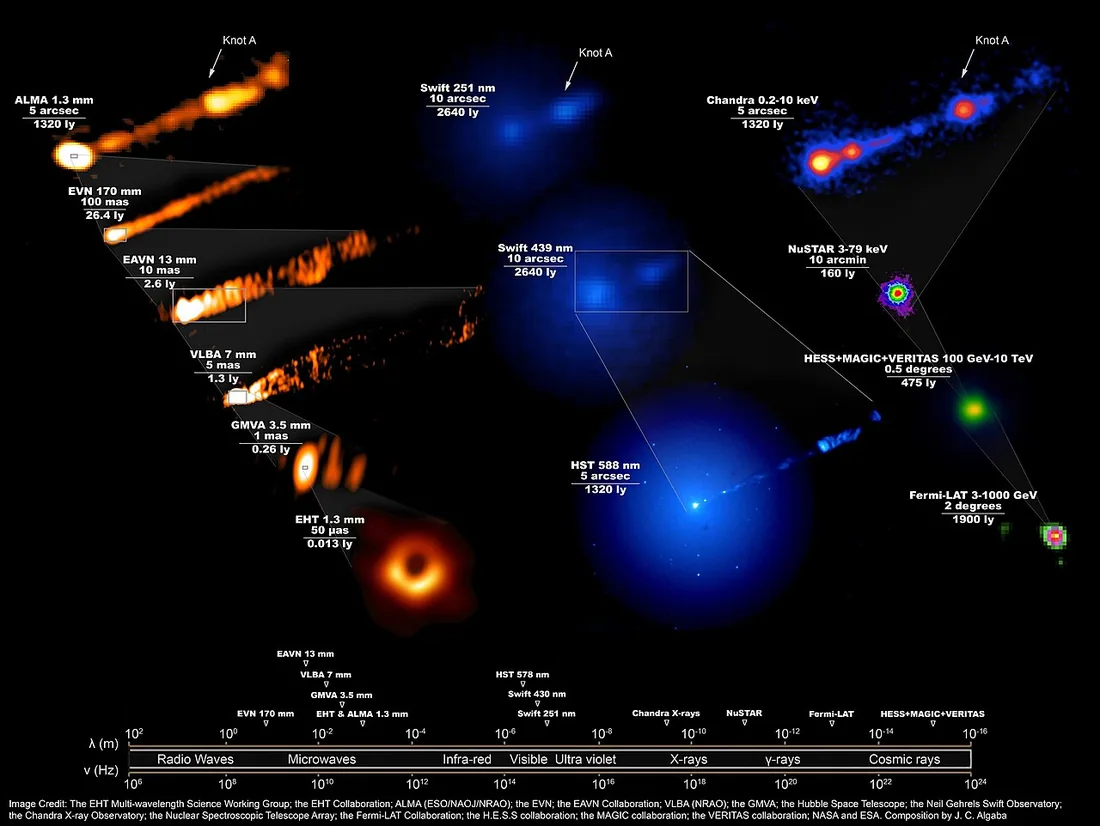
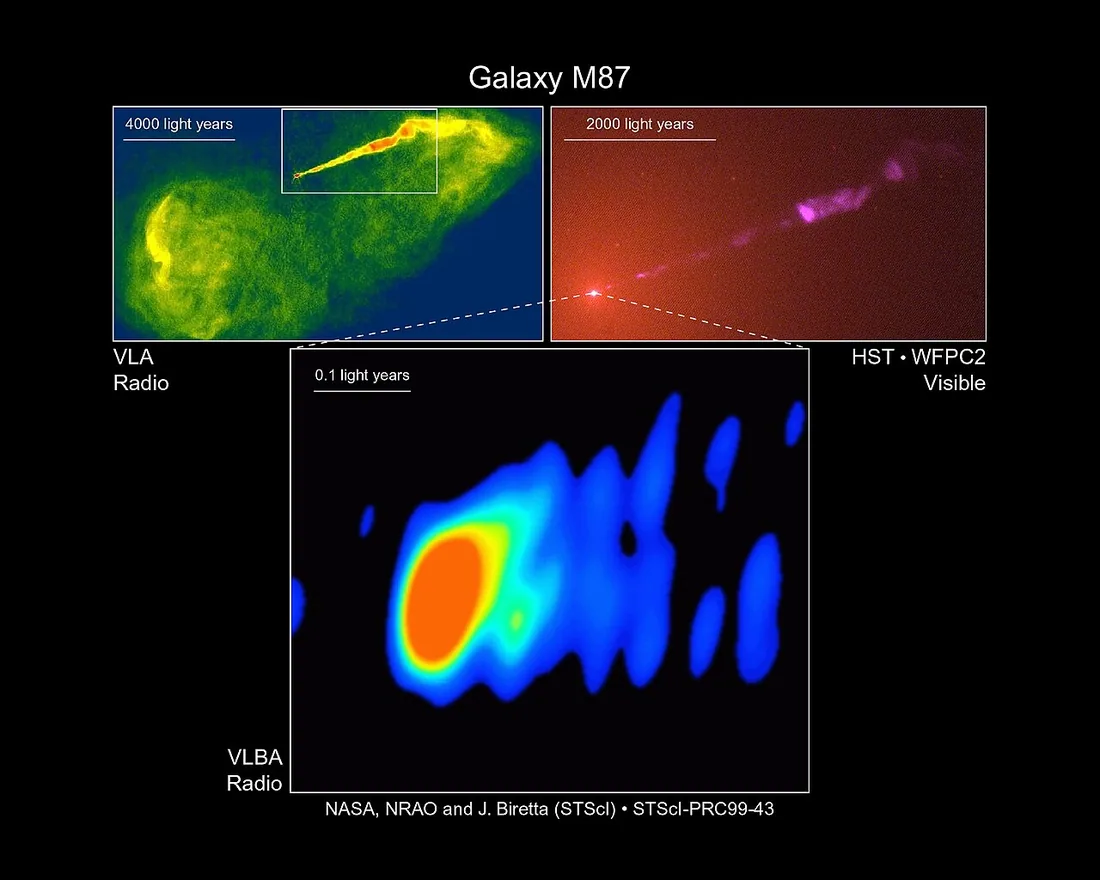
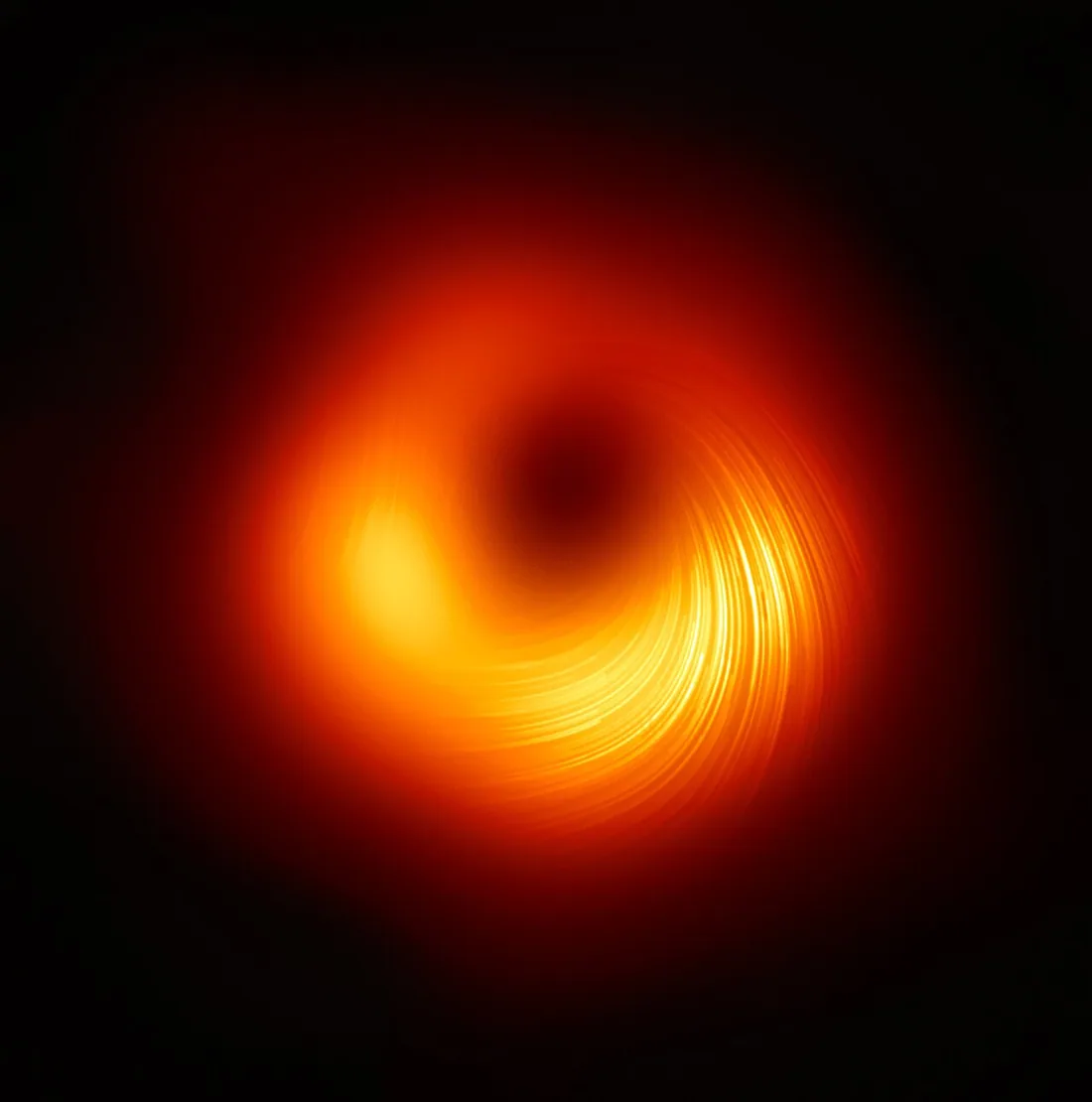
In 2019, the Event Horizon Telescope — a network of radio dishes spread across the whole planet — released the first image of a black hole. It showed the glowing ring of the supermassive black hole at the centre of the galaxy M87, about 55 million light years away. In 2022, the same team released an image of Sagittarius A*, the black hole at the centre of our own galaxy.
What we still don't know
Black holes sit at the meeting point of the two great theories of physics: gravity and quantum mechanics. What happens to information that falls in? What lies inside the event horizon? These questions are still open, and they are among the hardest problems in science.
For now, black holes remain what they have always been — the universe at its most extreme.