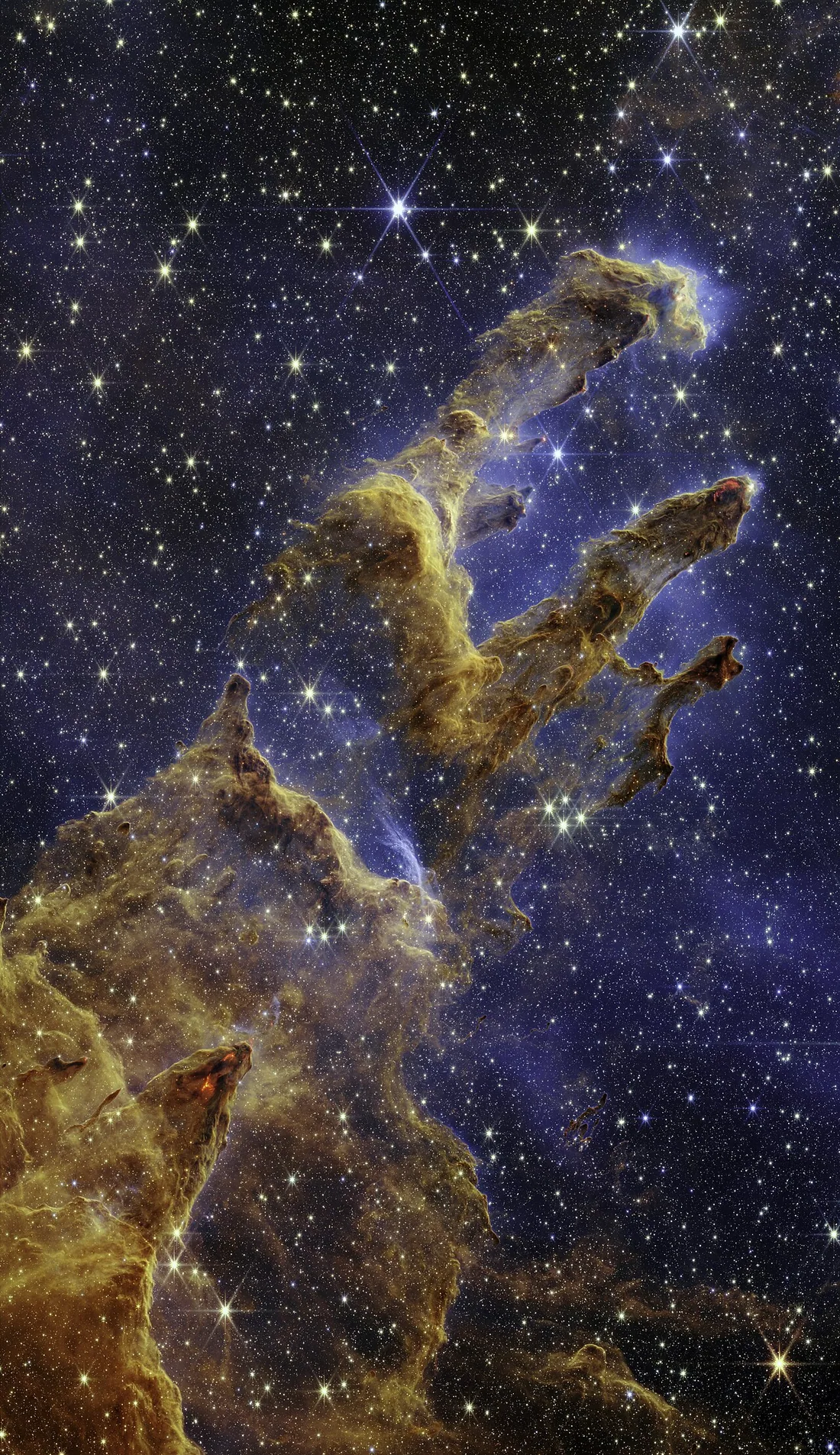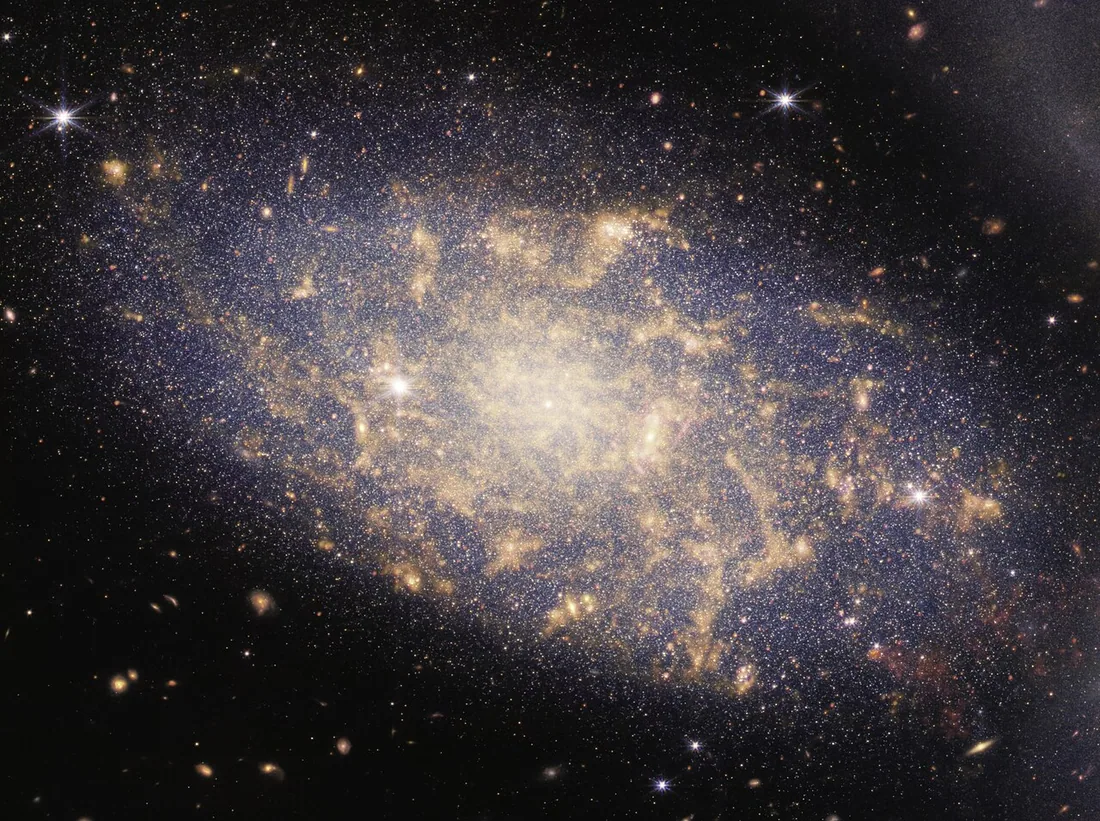
The James Webb Space Telescope is the most powerful telescope ever sent to space. It was built by NASA together with the European and Canadian space agencies, and it launched on 25 December 2021. Since then it has sent back pictures of the universe that no earlier telescope could capture.
Why put a telescope in space?
Earth's atmosphere blurs the light that reaches us and blocks much of the infrared. A telescope in space avoids both problems. Webb orbits the Sun about 1.5 million kilometres from Earth, at a point called L2, where it can stay cold and keep a clear view of the sky.
How does it work?
Webb is an infrared telescope. It sees heat and light that our eyes cannot, which lets it look through clouds of dust and see very distant, very old objects.
- Its main mirror is 6.5 metres across, made of 18 gold-coated hexagons
- A huge sunshield, about the size of a tennis court, keeps the instruments cold
- It works best in infrared, where cool and distant objects glow
What has it found?
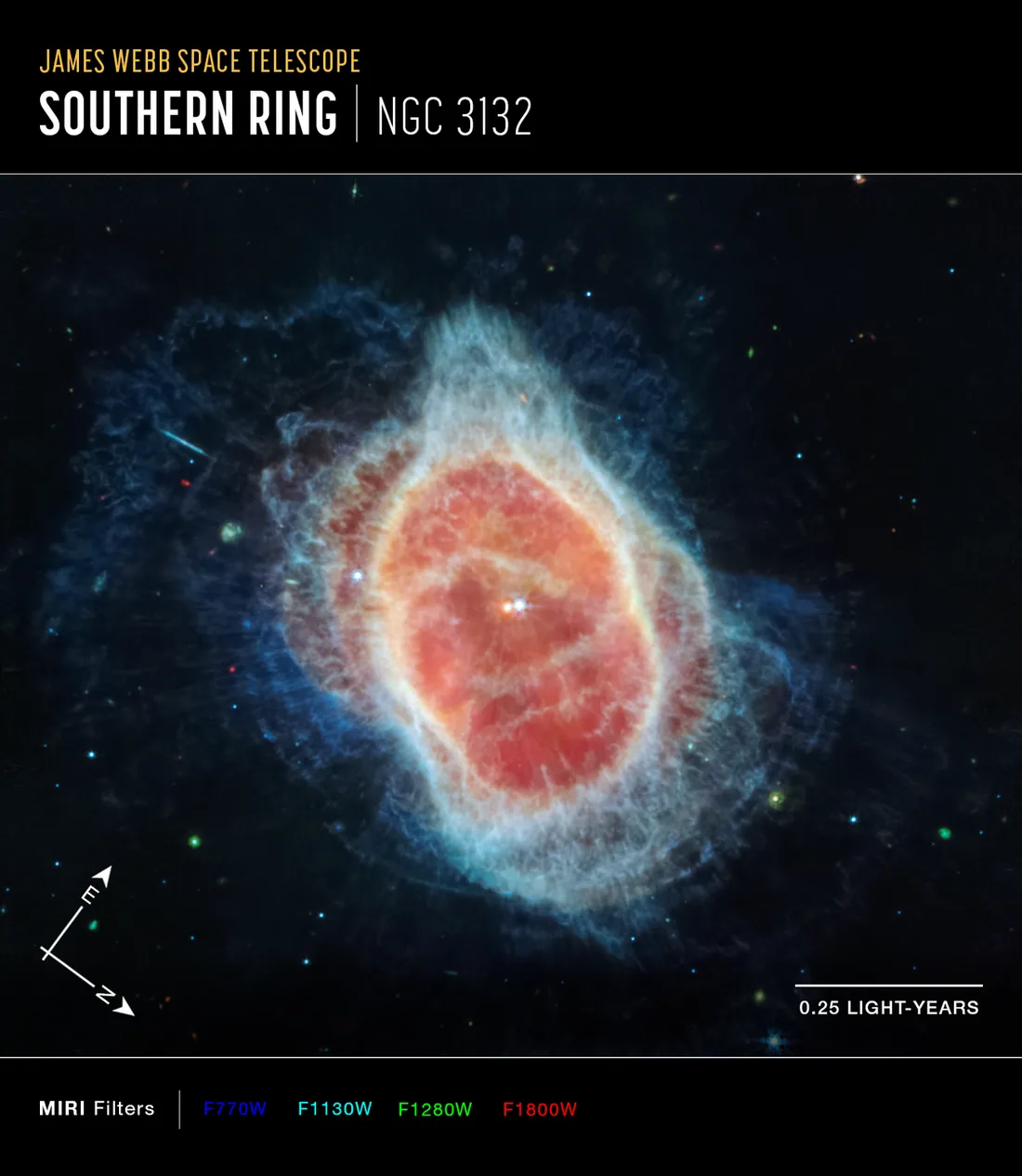
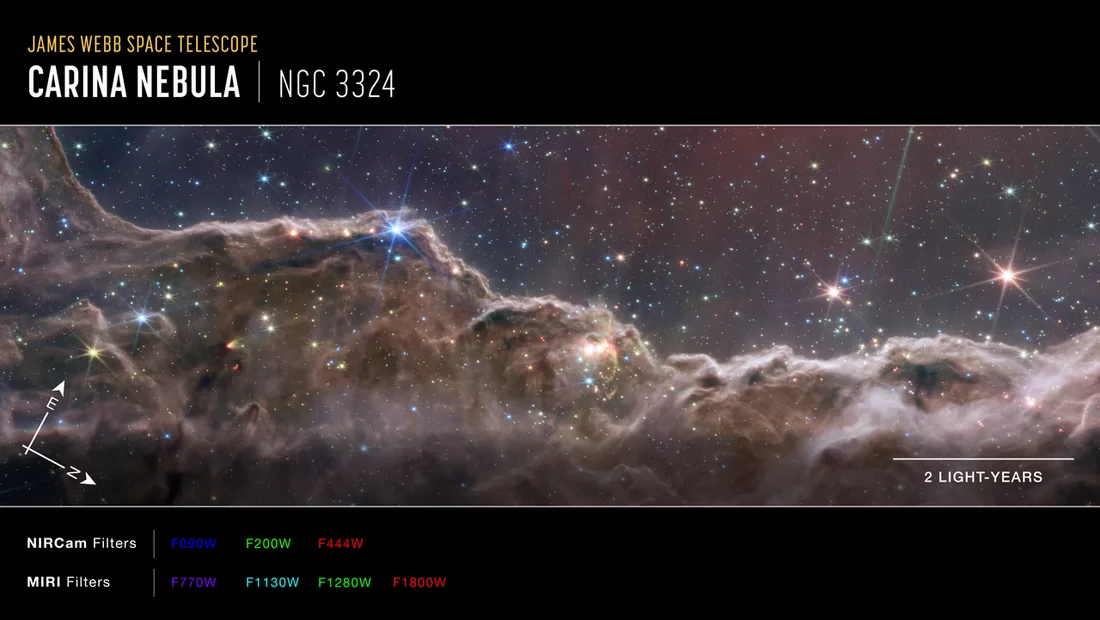
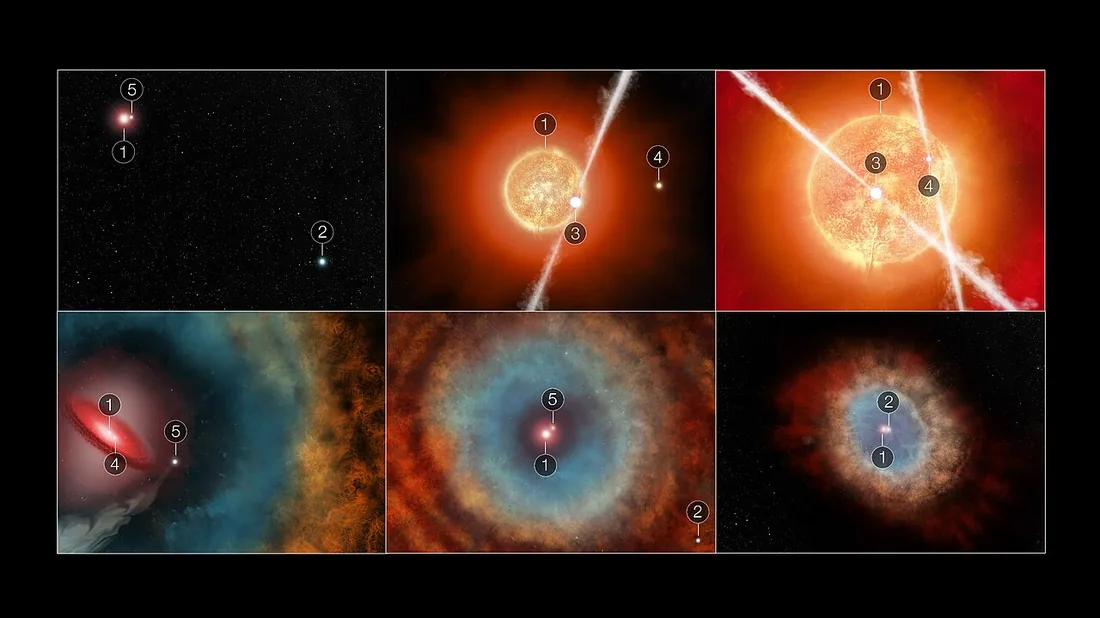
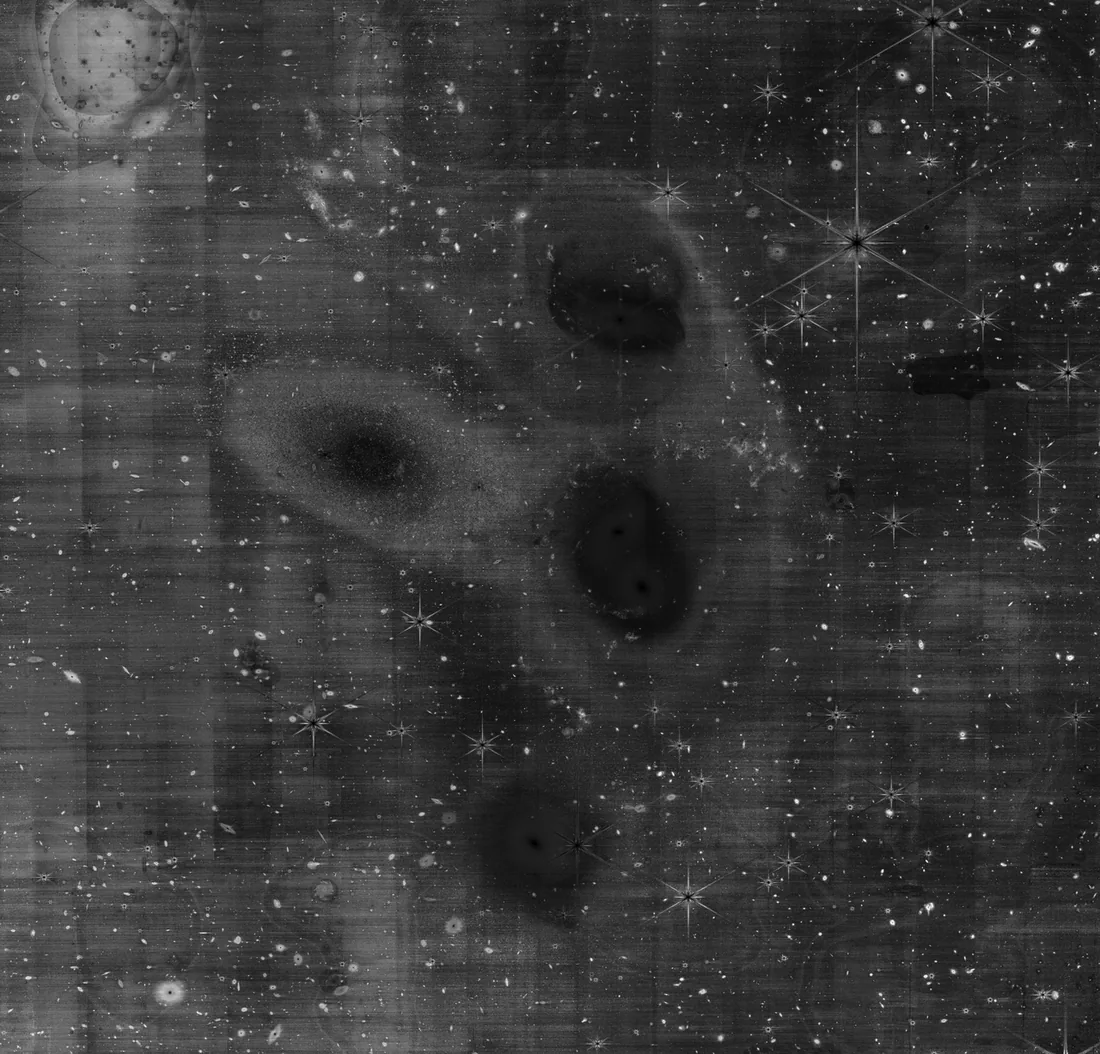
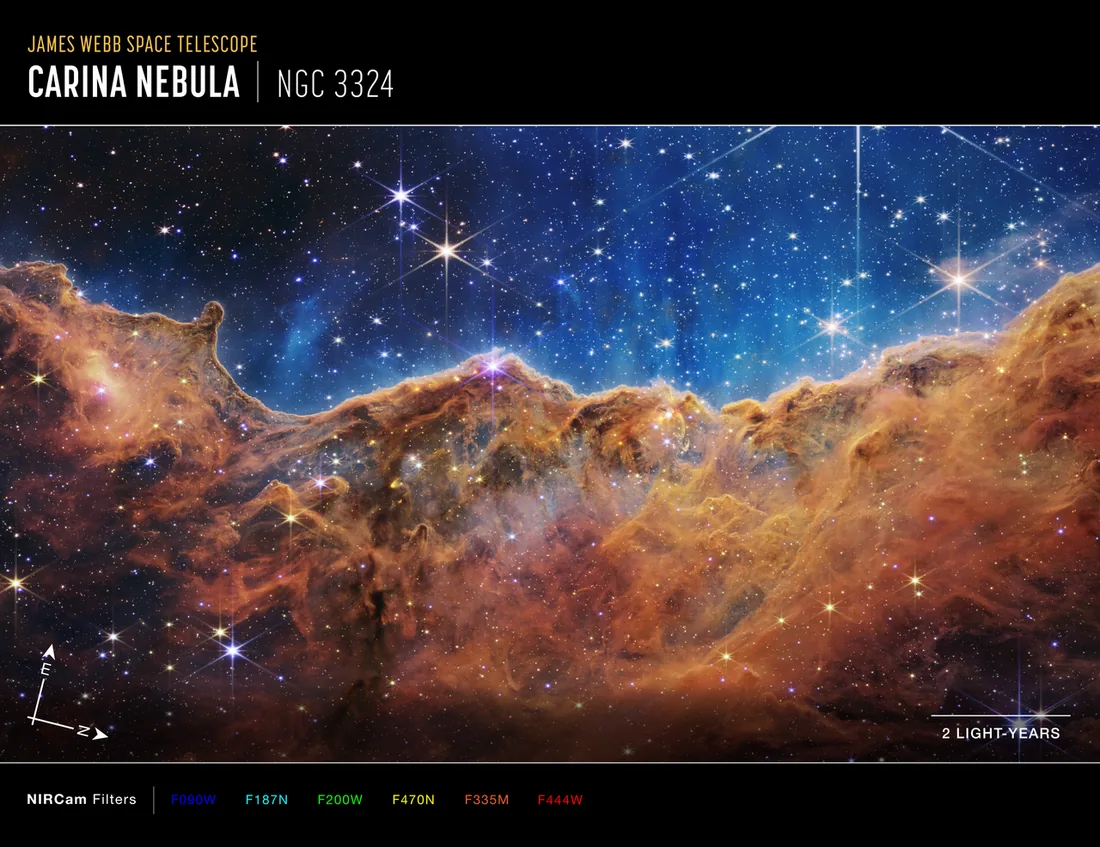
Webb's first images, released in July 2022, showed the Carina Nebula, the Southern Ring Nebula, a group of galaxies called Stephan's Quintet, and a deep field packed with thousands of galaxies. One of its most famous pictures is the "Cosmic Cliffs" in the Carina Nebula — a glowing wall of gas and dust where new stars are being born.
Webb has also studied the atmospheres of planets around other stars, looking for the chemical signs of water and other molecules.
Why it matters
Because light takes time to travel, looking far away means looking back in time. Webb can see galaxies that formed more than 13 billion years ago, not long after the universe began. Every image helps astronomers understand how the first stars and galaxies formed, and how the universe grew into what we see today.
Everyone can use it
Webb's discoveries are shared openly, and astronomers around the world — including in India — use its data. India studies the sky with missions such as AstroSat and Aditya-L1, and space science today is a worldwide project. The pictures belong to everyone.