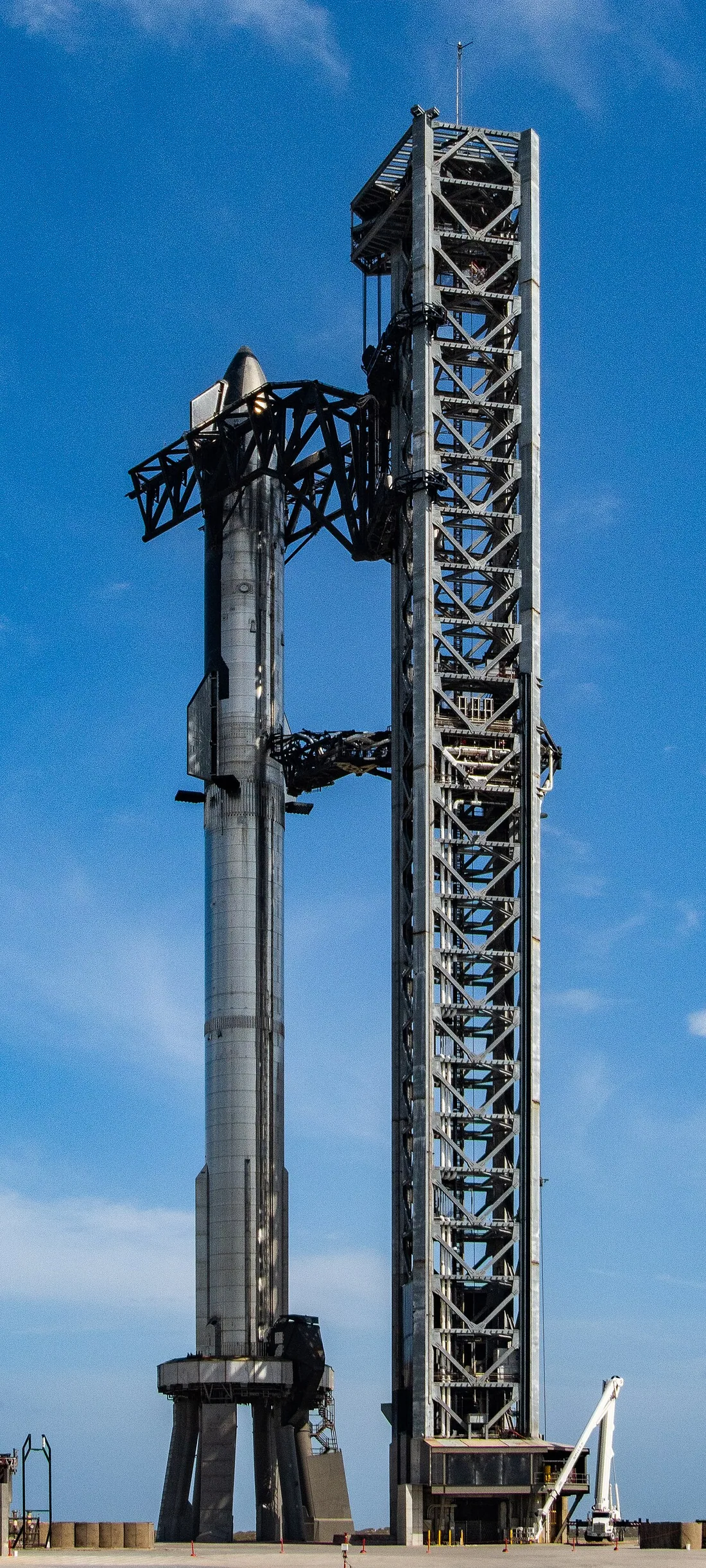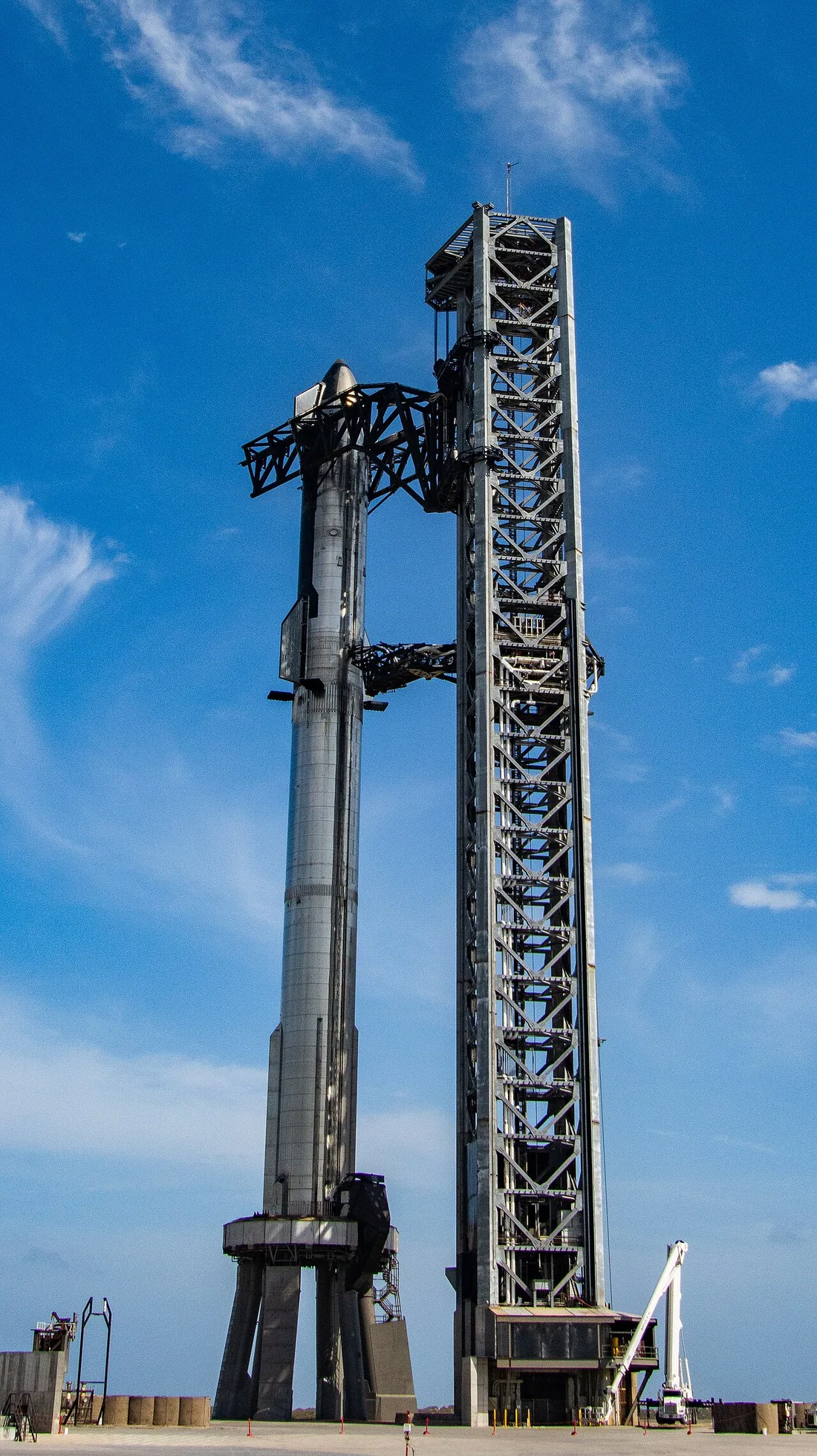
Starship is the biggest rocket ever built. It stands about 120 metres tall and is designed by SpaceX to carry people and cargo to the Moon, to Mars, and into Earth orbit. When it lifts off, it produces more thrust than any rocket in history.
What is Starship?
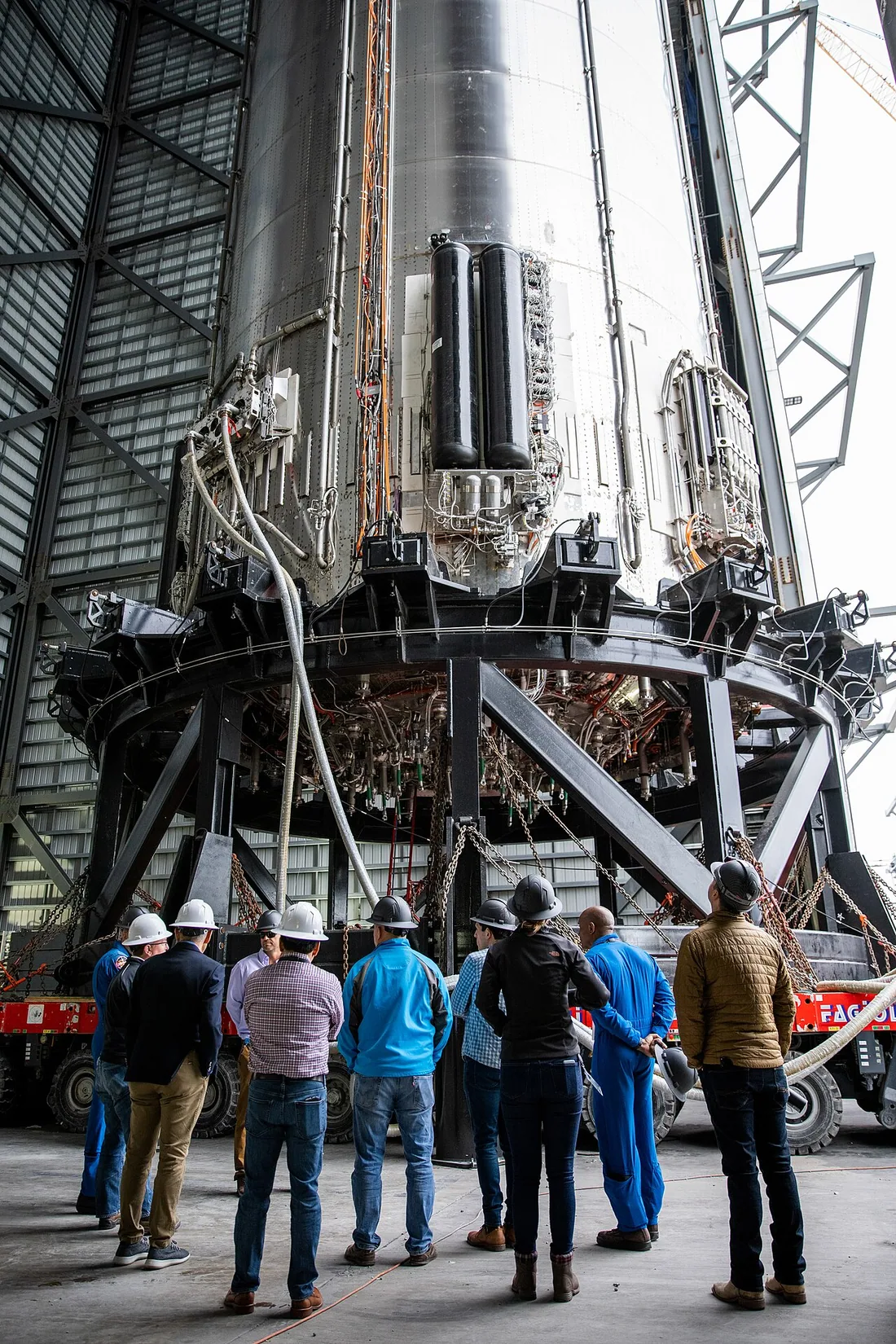
Starship is made of two parts. The first stage is a giant booster called Super Heavy, which has 33 engines. On top sits the Starship spacecraft itself, which has its own engines and can carry crew or cargo. Together they form a system that is meant to be fully reusable — the goal is to fly, land, and fly again, like an aircraft.
- About 120 metres tall — taller than any rocket before it
- 33 engines on the booster, six on the ship
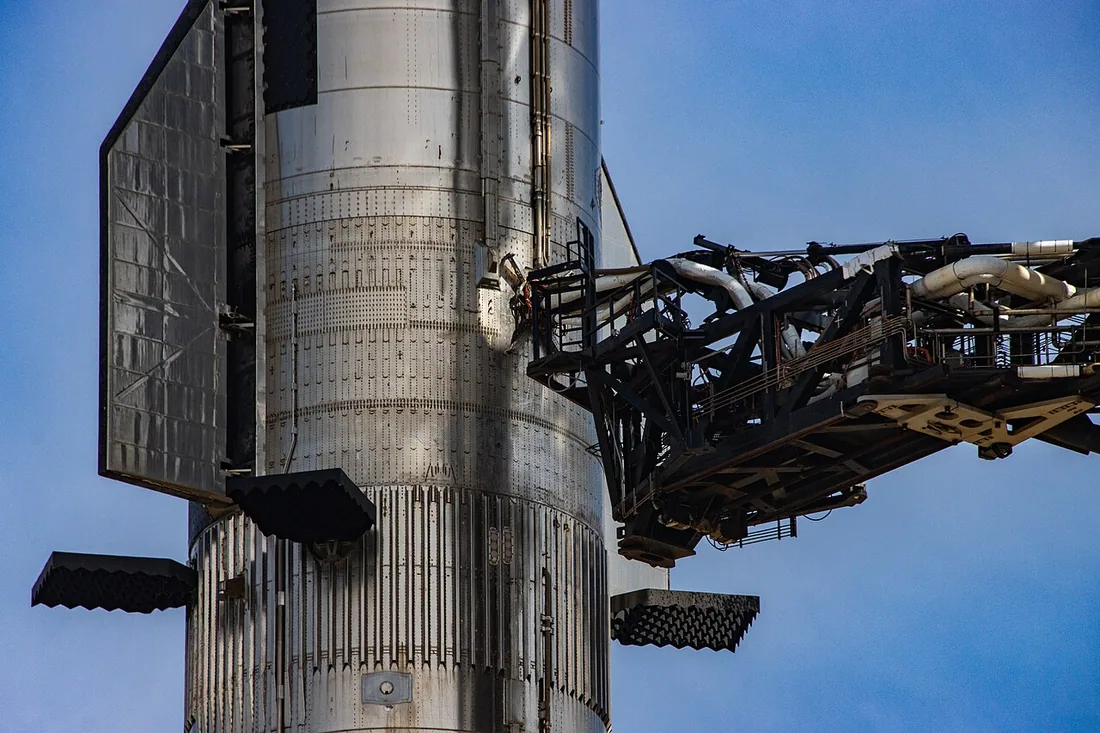
- Built from stainless steel, which stays strong when it gets hot
- Designed to be fully reusable
How does it fly?
Starship launches straight up. A few minutes after liftoff, the booster separates from the ship in a move called hot staging, where the ship's engines fire while the two are still attached. The booster then flies back to the launch tower, and in recent tests it has been caught in mid-air by giant mechanical arms nicknamed "chopsticks". The ship carries on to space, re-enters the atmosphere, and lands upright.
Why does it matter?
Today, most rockets are used once and then thrown away. Starship is meant to change that. Lower launch costs would make it easier to build space stations, send supplies to the Moon, and one day send people to Mars. NASA has chosen a version of Starship as the lander for its Artemis Moon missions.
The road so far
The first test flights ended in explosions, which is normal for a brand-new rocket. Each flight taught the team something new. Later tests reached space, survived the heat of re-entry, and brought the booster back to the tower. The programme is still developing, and every launch is watched around the world.
Why people watch
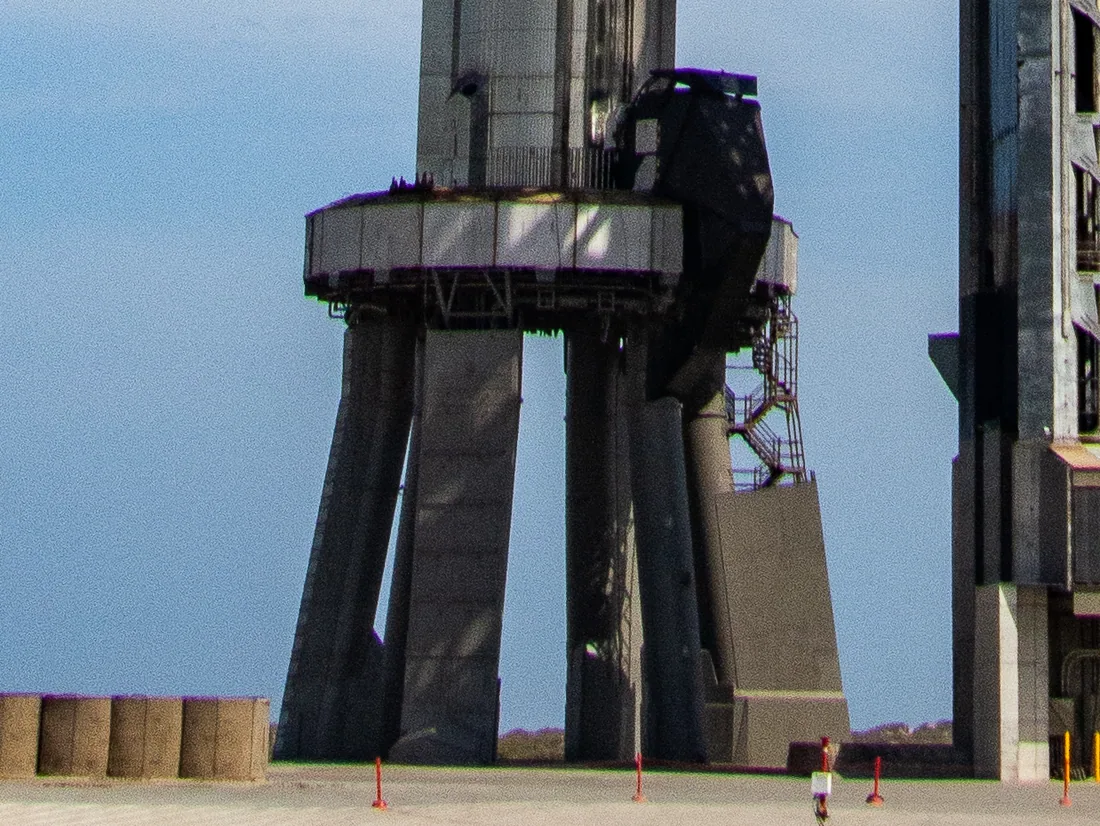
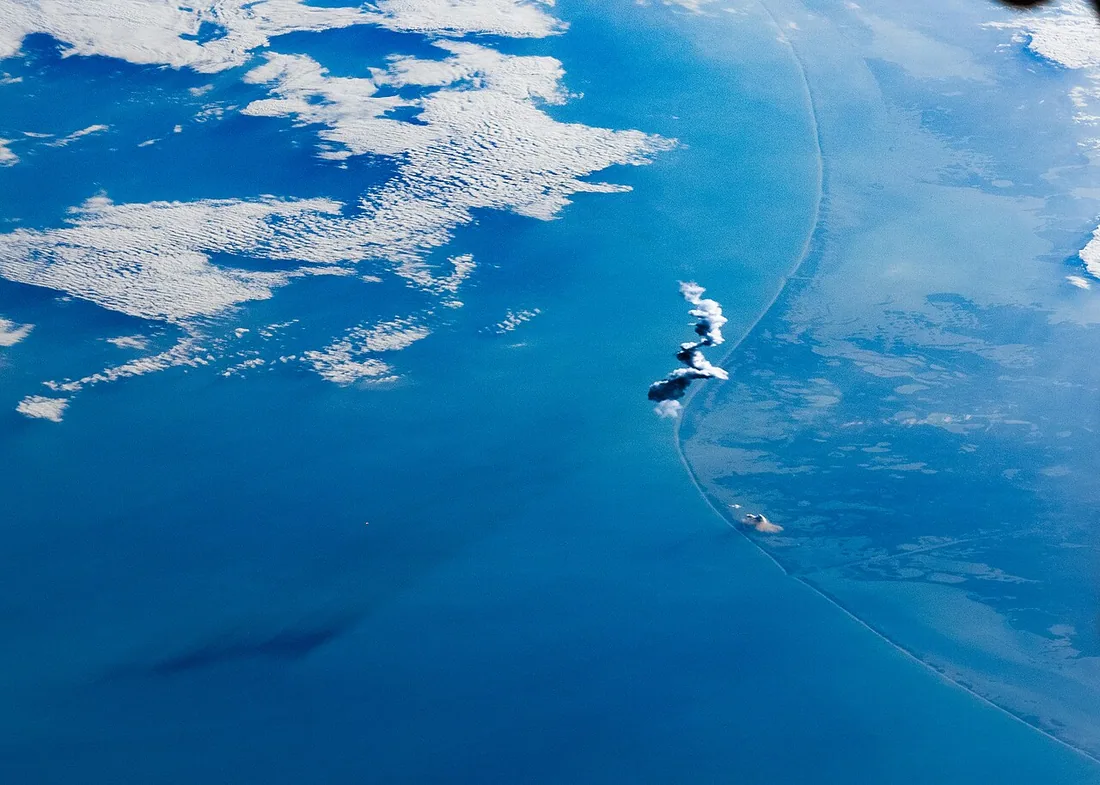
Starship launches from Starbase in Texas. Because the rocket is so large and bright, its launches can be seen from far away and are often streamed live. For anyone who follows space, it is one of the most dramatic sights in modern rocketry.